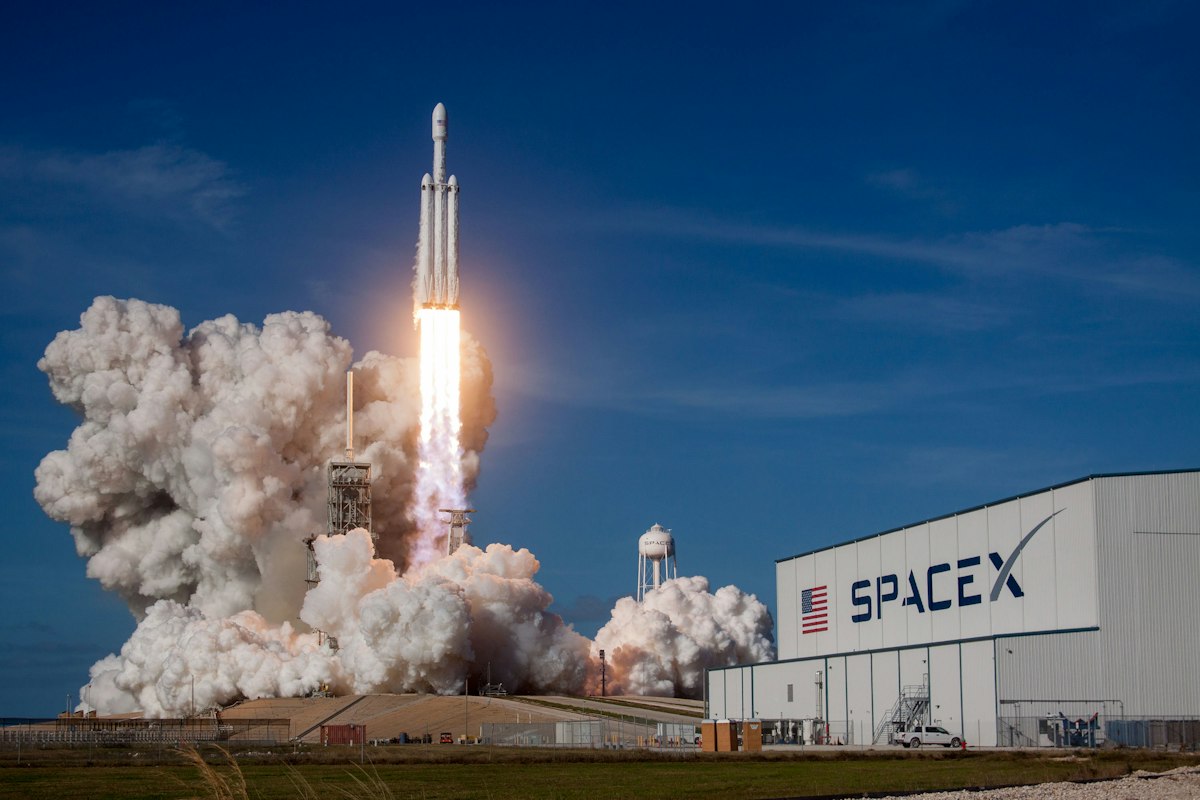
The Numbers Behind the Historic Debut
When the opening bell rang at 9:30 AM Eastern Time on Monday, SpaceX began trading at $248 per share, representing an 18% premium over its IPO price of $210. By the closing bell, the stock had settled at $267, giving the company a valuation of $1.82 trillion and instantly making it one of the ten most valuable publicly traded companies on Earth. The offering raised $47.3 billion in primary capital, with an additional $12 billion coming from the Starlink carve-out.
The demand was staggering. Goldman Sachs, which led the underwriting syndicate alongside Morgan Stanley and JPMorgan, reported that institutional investors placed orders totaling more than $1.9 trillion for shares. Retail investors, accessing the offering through platforms like Fidelity and Charles Schwab, contributed another $89 billion in bids. "This is not merely an IPO," said David Solomon, CEO of Goldman Sachs. "It is a referendum on the future of human civilization in space."
The capital injection gives SpaceX a war chest roughly equivalent to the annual GDP of Portugal. For context, NASA's entire annual budget stands at approximately $25 billion, meaning SpaceX now commands resources nearly double that of the agency that once dominated American spaceflight.
Musk Crosses the Trillion-Dollar Threshold
At the closing price of $267 per share, Elon Musk's 42% stake in SpaceX is worth approximately $765 billion. Combined with his existing holdings in Tesla, xAI, Neuralink, and The Boring Company, his total net worth reached $1.04 trillion, according to Bloomberg's Billionaires Index. The milestone places him in a financial category entirely his own, with his nearest rival, Amazon founder Jeff Bezos, trailing at approximately $312 billion.
"A trillion dollars is not just a number," observed Dr. Kathleen Eisenhardt, professor of strategy at Stanford Graduate School of Business. "It represents the market's conviction that SpaceX has solved the fundamental economics of space access. Musk has built what amounts to a railroad monopoly for the solar system."
The wealth surge also reignites debates about taxation and economic inequality. Senator Elizabeth Warren of Massachusetts issued a statement calling for an "ultra-billionaire wealth tax" of 6% on fortunes exceeding $1 billion, arguing that "no single person should hold more wealth than the bottom 50% of Americans combined." Musk responded via his X platform, posting a meme depicting himself as a dragon sitting atop a mountain of gold coins.
Starlink Spin-Off Creates Separate Powerhouse
Perhaps the most consequential structural decision in the IPO was the partial spin-off of Starlink, SpaceX's satellite internet constellation. Starlink began trading as a separate tracking stock under the ticker "LINK," opening at $78 and closing at $91, for a market capitalization of $412 billion. The entity now serves 8.4 million subscribers across 147 countries, generating quarterly revenue of $3.2 billion with gross margins of 68%.
"Starlink is the cash cow that funds everything else," explained Chris Quilty, founder of Quilty Space Analytics. "Think of it as the AWS of space, a utility business with recurring revenue that subsidizes the more speculative ventures like Mars colonization." The analogy is apt: Amazon Web Services began as an internal infrastructure project before becoming the profit engine that powered Amazon's expansion into retail, entertainment, and logistics.
The Starlink tracking stock structure allows SpaceX to maintain operational control while giving investors pure-play exposure to the satellite broadband business. It also creates a potential currency for acquisitions, with industry analysts speculating that SpaceX may use LINK shares to acquire struggling legacy satellite operators like Viasat or Eutelsat.
Market Implications and Investor Reaction
The SpaceX IPO has sent shockwaves through global equity markets. Aerospace and defense contractors including Lockheed Martin, Boeing, and Northrop Grumman saw their shares decline between 4% and 9% on the debut day, as investors reallocated capital toward what they perceive as the dominant player in the new space economy. The iShares U.S. Aerospace & Defense ETF (ITA) fell 3.2%, its largest single-day decline since March 2020.
"Legacy aerospace is facing an existential threat," said Ron Epstein, aerospace analyst at Bank of America. "SpaceX's cost structure is so far below the competition that it resembles what Toyota did to Detroit in the 1980s, except the gap is even wider." SpaceX's Falcon 9 rocket can launch payloads to low Earth orbit at approximately $2,700 per kilogram, compared to roughly $25,000 per kilogram for United Launch Alliance's Atlas V.
What Comes Next for SpaceX
With $47 billion in fresh capital, SpaceX has outlined an aggressive expansion plan. The company's Starship vehicle, currently in its fourth generation with 37 test flights completed, is scheduled for its first crewed mission to lunar orbit in March 2027, carrying a Japanese billionaire and eight artists on a week-long journey. The Mars cargo mission, originally planned for 2026, has been pushed to 2028, with Musk citing the need for additional Starship reliability testing.
The company also announced plans to accelerate its Starlink constellation from the current 7,800 satellites to 42,000 by 2030, a density that would enable global coverage with latency under 20 milliseconds, competitive with terrestrial fiber optic networks. Additionally, SpaceX revealed its "Starlink Direct-to-Cell" service, which will allow unmodified smartphones to connect to satellites, bypassing traditional cellular towers entirely.
"SpaceX is no longer a rocket company," said Laura Forczyk, founder of space consulting firm Astralytical. "It is becoming a vertically integrated space infrastructure monopoly, controlling launch, communications, and eventually in-space manufacturing. The IPO simply gives it the balance sheet to execute that vision faster than anyone anticipated."