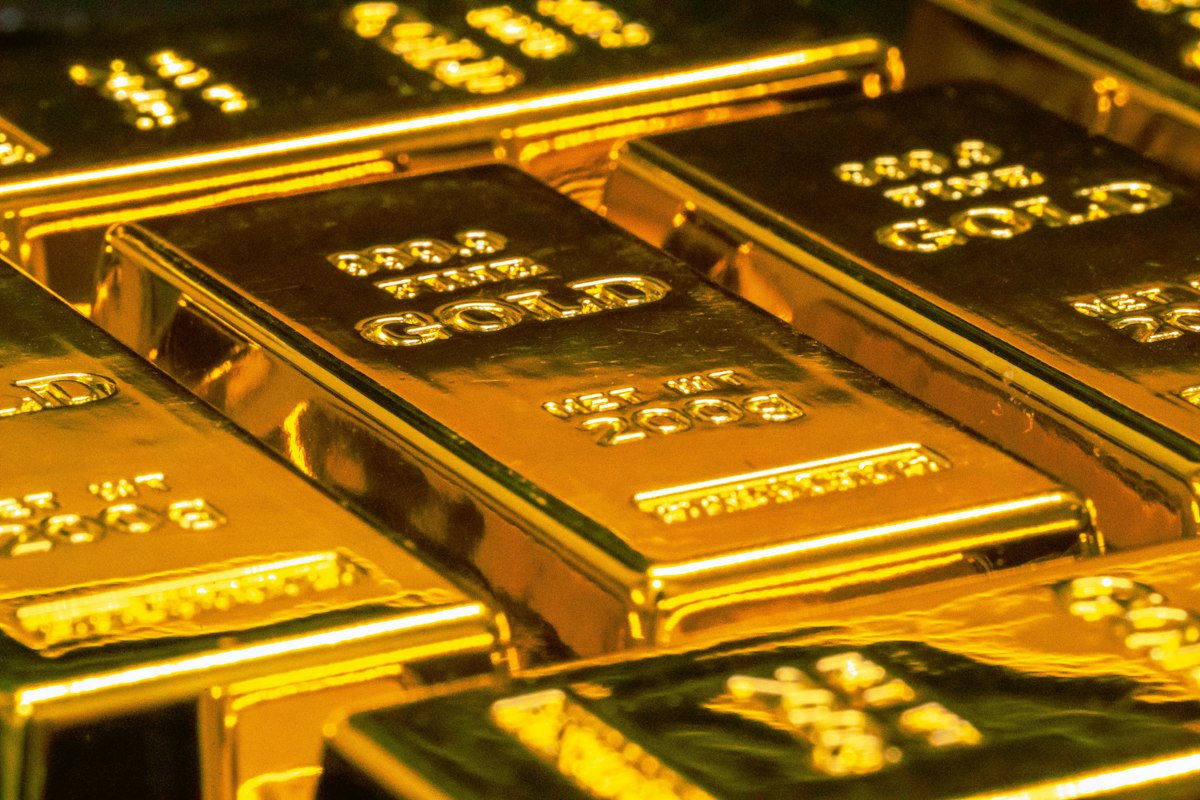
The Drivers Behind the Rally
The gold market has defied conventional wisdom in 2026. Historically, gold performs poorly when real interest rates, which account for inflation, are positive and rising, because the metal pays no yield and becomes less attractive relative to income-generating assets like bonds. The 10-year Treasury inflation-protected security currently yields 1.8%, well above the zero to negative levels that accompanied gold's previous record highs in 2020 and 2024.
Yet gold has climbed relentlessly. The explanation lies in a shift in who is buying. While Western institutional investors have been net sellers of gold exchange-traded funds, with holdings in the largest gold ETF, SPDR Gold Shares, declining by 8% since January, central banks have purchased a record 1,200 metric tons in the first five months of 2026, according to World Gold Council data. China alone added 420 tons to its reserves, bringing its total holdings to 2,850 tons and reducing the dollar's share of its foreign exchange reserves from 59% to 54%.
"This is a structural reallocation, not a tactical trade," said Jan Nieuwenhuijs, an independent gold market analyst. "Central banks are treating gold as a reserve asset that carries no counterparty risk, which matters enormously when you are worried about sanctions, confiscation, or the long-term value of fiat currencies."
Middle East Conflict and Safe-Haven Demand
The immediate catalyst for gold's push to record levels was the escalation of hostilities between Israel and Iran in late May, which raised fears of a broader regional conflict that could disrupt oil supplies and global trade routes through the Strait of Hormuz. Although a ceasefire was announced this week, gold has retained most of its gains, suggesting that investors view the truce as fragile and the underlying tensions as unresolved.
Gold's behavior during the crisis illustrated its enduring role as a crisis hedge. In the 72 hours following the initial Israeli strikes on Iranian nuclear facilities, gold jumped $87 per ounce, while the S&P 500 fell 3.2% and Brent crude surged 14%. The correlation between gold and the CBOE Volatility Index, a measure of market fear, reached its highest level since the Russian invasion of Ukraine in 2022.
"Gold is doing exactly what it is supposed to do," said Suki Cooper, precious metals analyst at Standard Chartered. "When geopolitical risk spikes, it is the asset that everyone trusts. You cannot print more of it, you cannot default on it, and you cannot sanction it out of existence. In a world of increasing geopolitical fragmentation, that is a powerful value proposition."
Physical Market Tightness
Beyond investment demand, the physical gold market is experiencing unusual tightness. The premium for gold bars in Shanghai, which reflects Chinese demand relative to global prices, has averaged $42 per ounce this year, more than double the historical average, indicating strong physical buying in the world's largest consumer market. In London, where the over-the-counter gold market settles approximately $50 billion in trades daily, dealers report that locating large quantities of physical metal has become increasingly difficult.
The tightness has been exacerbated by logistical constraints. Gold refining capacity is concentrated in a small number of facilities, primarily in Switzerland, and several major refiners have reported production bottlenecks due to stricter environmental regulations and labor shortages. The time required to convert 400-ounce London Good Delivery bars into the kilogram bars preferred by Asian consumers has extended from two weeks to six weeks, creating a temporary supply squeeze.
"The paper market and the physical market are diverging," said Ross Norman, CEO of Metals Daily, a precious metals pricing service. "Futures prices might say one thing, but if you actually want to take delivery of physical gold, you will pay a significant premium. That is a telltale sign of genuine scarcity."
Impact on Mining Companies and Production
The price surge has transformed the economics of gold mining. The average all-in sustaining cost for major gold producers is approximately $1,280 per ounce, meaning that at current prices, the industry is generating profit margins of roughly 48%, the highest since the 2011 gold peak. The VanEck Gold Miners ETF, which tracks the largest mining companies, has risen 34% year-to-date, outperforming the underlying metal as leverage works in investors' favor.
Major producers are responding by increasing capital expenditure and accelerating project development. Newmont, the world's largest gold miner, announced a $2.4 billion expansion of its Tanami mine in Australia, while Barrick Gold approved development of the Reko Diq project in Pakistan, which had been stalled for a decade due to political disputes. Exploration budgets across the industry are expected to rise 28% this year, according to S&P Global Market Intelligence.
Outlook and Price Targets
Analysts are divided on whether gold can sustain its current levels. Goldman Sachs raised its 12-month price target to $2,700 per ounce, citing continued central bank buying and the potential for a U.S. recession that would force the Federal Reserve to cut rates aggressively. JPMorgan is more cautious, forecasting a pullback to $2,200 if geopolitical tensions ease and real interest rates remain elevated.
The consensus among commodity strategists is that gold has entered a new structural bull market driven by de-dollarization trends that will persist regardless of near-term interest rate movements. The BRICS nations have discussed creating a gold-backed settlement mechanism for international trade, and while implementation remains distant, the mere discussion has reinforced gold's monetary credentials.
"Gold at $2,500 is not an anomaly," said Ronnie Stoeferle, managing partner at Incrementum AG and author of the annual "In Gold We Trust" report. "It is a symptom of a global monetary system under stress. As long as governments continue to run deficits and central banks continue to monetize debt, gold will serve as the ultimate hedge against currency debasement. The surprise would not be if gold goes higher. The surprise would be if it stopped."